
November 01, 2000

Please Step forward for the Chinese People

Overseas Chinese Write to Qiao Shi, Popular Former Senior PRC Leader

The Epoch Times: The Nobel Peace Prize and the Chinese People (Excerpt)

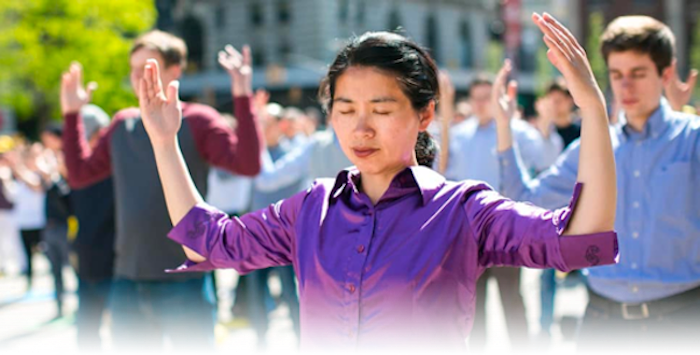
At a time when the overseas Chinese community is celebrating the first Nobel Literature Prize awarded to a Chinese, I want to take a moment to look, from the Chinese perspective, at the association between this prize and another prominent Nobel Prize - the Nobel Peace Prize. The Nobel Peace Prize is an award recognizing the human spirit. It is different from the prizes awarded to those who made achievements in the sciences, as their contributions can be quantified. The Nobel Peace Prize eulogizes the manifestation of peacefulness and tolerance and its significant impact on human history, therefore it better embodies humanity, morality and rationality. Relative to the literature prize, it better captures the social and collective characteristics of human beings, and therefore it is more global in nature. In a large measure, the Nobel Peace Prize is not the recognition of some accomplishment, but a public endorsement of contemporary morals and spiritual pursuits. Do the Chinese have any "predestined relationship" with the Nobel Peace Prize? The answer, unequivocally, is affirmative. Hypothetically, if there were freedom of expression in China, potential Chinese peace prize awardees could win over public support, develop their meritorious prestige, and absorb various constructive proposals and rational ideas into the minds of the Chinese people. If there were freedom of choice in China, its people, rather than tolerating the shortcomings of Marxism and the associated corruption, could take steps to implement rational political and state administrative governing bodies. If there were freedom of press in China, public officials would be closely monitored, allowing nobody to act above the law, and the journalists would be able to expose both goodness and criminal acts to the public scrutiny. Hence, the ongoing tyranny in China not only stifles the nation' vitality, but also deprives numerous Chinese of their worldwide renown and nobleness. In China, if there were freedom of belief, people would rather believe in God than succumb to Caesar. Without an independent media, Martin Luther King could not have become a household name, Gandhi could not have commanded respect around the world, and Mandela could not have earned the honors amply bestowed him. Whenever I think about this, I feel my boundless gratitude towards God because He did not make the Chinese leader the head of state for the United States, Prime Minister in the United Kingdom, or the General Secretary of the United Nations. Otherwise, the world would be in great peril and plunged into pitch darkness - it would lose its Nobel Prizes for Peace and Literature. Then, is there any chance that China today can even be associated with the Nobel Peace Prize? The answer, again, is affirmative. Until now, all efforts by China' cultural and intellectual elite to educate its public on the merits of western democracy and free society have hit snags, thanks to the withering of the Chinese people' conscience and their numbness to justice. Meanwhile, the country' fitful reform program, in its seemingly unpredictable backward as well as forward strides, makes a show in and of itself - although observers still find it hard to choose between being amused by it or being outright sympathetic to it. At any rate, it seems those Western ideas, foreign to the Chinese, are hard to spread, and even harder to implement. From the early revolution to overthrow the monarchy, to the later education drive, to the science effort, up until today' political reform, none of these movements touched the hearts of the Chinese people, in spite of their ostentatious goal of salvaging the country. Setting our eyes on the even more remote past, we find that the successful invaders like the Mongols and Manchurians, after starting their monarchies in China, were gradually assimilated into the Chinese culture - however foreign this must have been to them at the outset - and eventually they became the so-called "minorities". This is evidence enough for the tenacious, retentive and assimilative power of the Chinese culture. Weighing this over and over, I can only humbly suspect that the link between the Nobel Peace Prize and the Chinese falls upon none other than Falun Gong. Falun Gong is completely an indigenous outgrowth, sprouted from Chinese soil. The influence of ancient Chinese cultivation practices such as Falun Gong can be easily seen in our language, alphabet, lifestyle, spiritual thinking, and traditional education. Although contemporary politics denies the values upheld by the primitive religions, Falun Gong has become almost irresistible to the broad public of the Chinese people, revealing the profound historical and practical reasons for the perennial failure of the modern Western science and social economic system to win over these same people. Without a good understanding of why this is, we, as genuine patriots, will forever be in a position of isolation and subordination. During the past year, those plain beyond the plainest country grandpas and grandmas, who had never heard of computer networks, had never even watched any TV, and many of whom had never been to Beijing, repeatedly visited the capital city in droves. In the face of most vicious beatings, indiscriminate detentions, or even death, they stay unmoved, sticking to their simple choice, which fully demonstrates to the world the valor and will of the oppressed. In the aftermath of the June 4th bloodshed, I myself left China in a haste to seek a place for a good and quiet life, never turning to take another look at the land that always stimulates tears and bitterness. In contrast, those country people only make me feel ashamed. In my recent talks with many people about China' current situation, we shared a common insight that all the past movements had not been mainstream, and thus we naturally put the blame on the public' lack of conscience. However, Falun Gong has shown us that it is not that the Chinese public lacks its fair share of conscience, but what it needs are the right goals to awaken their conscience. Some people attribute Falun Gong' peaceful civil disobedience to its Chinese roots or culture. Some, as maintained by Falun Gong, explain it as individual cultivation and moral uplifting. The Western society generally subscribes to the notion that the Falun Gong phenomenon indicates China' internal awakening, after many failed attempts by the West, to the need for a change, and thus it is worthy of outside support. The official reading of the Chinese government, however, is while the ruling class historically holds intellectual "rebellions" in contempt, this time it fears harmless people practicing meditation. Whether you want to admit or not, the continual protest by the Falun Gong members in Tiananmen Square does reveal something previously unexplainable. More strikingly, although the Falun Gong masses do not intend to challenge the Chinese leadership, their collective action has made the leadership lose their sleep. A prerequisite to the peace prize is the existence of conflict; in fact, without conflict, there is no peace to rave about. A glance over the records for the past peace prizes would quickly reveal that they all resulted from peaceful resolution of conflict. This leads to the two mutually exclusive conditions that a movement has to meet simultaneously before it can be honored with a peace prize: 1) the antagonistic party that precipitated the conflict has to be present, 2) at the same time, the protagonist party to be honored persists side by side with the antagonistic party. The current situation in China dictates that the Chinese meet these criteria. Moreover, the scope and strength of the implication of peace has been enormously expanded and reinforced with the peaceful appeals by the Falun Gong members in the past year - they have been stunningly peaceful throughout, unconditionally and without giving up their belief. On the other hand, the irrational crackdown carried out by the government at the expense of violating the Chinese constitution, coupled with its widespread employment of extreme torture devices, makes it much harder to fulfill peace. It puts a higher demand on the degree of rationality and tolerance on the part of the suppressed and also helps the peaceful side to eventually win sympathy from the people of the world. As a result, the more brutal the persecution, the more contrasting and prominent it becomes when compared against the peaceful rationality and adherence to benevolence exhibited by Falun Gong. This reasoning has led some people to claim that in China today, Falun Gong exemplifies a peaceful, progressive civil movement. The peaceful movement that broke out in China eleven years ago was quickly and easily crushed by the authorities because it lacked an inherent moral strength and a corresponding tempering process to attain it - hence, it was actually not a real movement for peace and rationality. By contrast, the eligibility of Falun Gong for the Nobel Peace Prize squarely lies in its avowedly nonpolitical nature, its demand for nothing more than the right to practice meditation. Such basic content and pursuit are the most solid and touching; they also constitute the most fertile soil to breed peace. One year' unrelenting struggle, one year' continual defiance of detentions, one year' unyielding adherence to its beliefs, and its non-opposition to the government epitomized by the stance of never hitting back regardless how it is victimized, Falun Gong unbelievably keeps up its composure with an effortless flourish. To its members, it looks so easy and natural as their ultimate goal is self-betterment and enlightenment. From this standpoint, what Falun Gong has in abundance is exactly what was lacking eleven years ago, and also what the Nobel Peace Prize is based upon. In addition, Falun Gong has millions of members from all walks of life in China. To some extent, it represents the bedrock of the Chinese society, since any of its turbulence will unavoidably compromise the society' equilibrium. Therefore, Falun Gong' sheer size and the great premium it puts on the global peace movement also deserve recognition and commendation. In this context, the crackdown becomes the backdrop of a stirring drama promoting peace and rationality; the larger its scope, the more conspicuous it is. When the general public in China all becomes sympathetic with Falun Gong, the craving for peace and rationality will become unstoppable. At that time, the spirit of the Nobel Peace Prize will have blossomed in China. Whether or not the Chinese people will actually be awarded with the prize suddenly becomes irrelevant. Falun Gong brings to us a new type of morality, and its associated strength anchored upon peacefulness and rationality. To help the Chinese win the Nobel Peace Prize in the new millennium, I hereby cast my vote for Falun Gong, with my whole heart and best wishes.

Recent News